Retail. One readable item, from the factory to the till.
A tag commissioned at source stays readable through distribution, receiving, the shop floor and the till. Innfini turns that into item-level stock counts, back-to-front replenishment, display compliance and omni-channel fulfilment — in one mobile application, on barcode, RFID or both.

A store knows what it sold. It rarely knows what it has.
Stock on hand is a number in a system, reconciled by a count that happens a few times a year and is out of date the day it finishes. Everything downstream inherits that error: replenishment fires late, the website promises stock the shop floor cannot find, and the gap between the two is discovered at the till.
No item-level truth
Inventory is known at SKU level at best. Which items, in which store, in front or in the back, is a question nobody can answer between counts.
Counting costs selling
Manual counts take associates off the floor for days, and the accuracy they buy starts decaying the moment the count closes.
Out of stock, in stock
The item is in the building but not on the shelf. To the customer and to the system that is the same as not having it.
Disconnected stages
Factory, warehouse and store each tag, scan and record separately, so nothing follows the item end to end.
One tag, read at every stage it passes.
The platform is built around the item rather than the location. A tag is commissioned at source and stays readable through distribution, receiving, the shop floor and the till — so each stage inherits the last one's truth instead of rebuilding it. One chain, covered end to end.

Commissioned at source
- Commissioning & stock management
- Serialization and encoding
- Mass printing
- Packing and shipping
- Handhelds & transition RFID portals
Verified without opening the box
- Automated shipping & receiving verification
- Pick and pack
- Inventory control
- Cross-docking
- Conveyor and tunnel automation
- RFID exceptions — re-printing, QC check
Counted without closing
- Inventory team cycle counts
- Receiving
- Sales & returns
- Omni-channel fulfilment from the store
- Display compliance & vitrine verification
- Dressing-room clean-up
- Anti-theft and shrinkage
- Fixed readers behind the wall · handhelds
What a store actually runs, and what each one changes.
Every process below is in one application with one role model, so a store associate, an inventory team and a supply-chain manager are working the same item records rather than three parallel systems.
Stock count
A full-store count stops being an event that closes the shop and becomes something an associate runs down an aisle. Counting item by item rather than SKU by SKU is what makes the rest possible: once you know which items are present, you also know which are missing, which are in the back, and which are on display in the wrong place.
- Count
- Fast, accurate mobile stock counts across front of house and back store
- Find
- Quickly find and identify individual items on the floor
- Replenish
- Eliminate out-of-stocks with back-to-front replenishment
- Comply
- Display and merchandise compliance, including vitrine verification
- Fulfil
- Flag items for omni-channel fulfilment; integrate with POS and process returns
Improve inventory visibility and accuracy while reducing associate time and effort. Decrease out-of-stocks, boost on-shelf availability, increase sales.
Innfini Retail Mobile
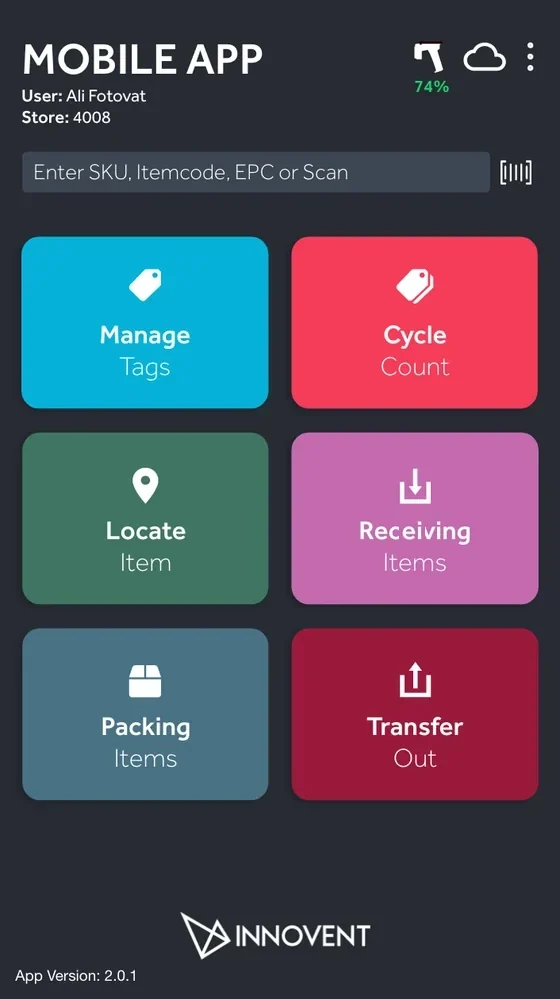
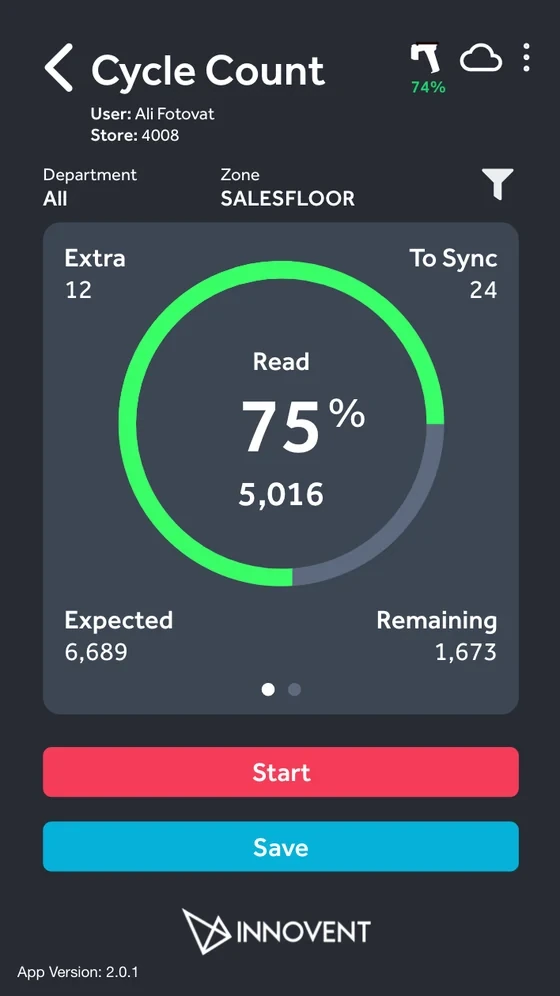
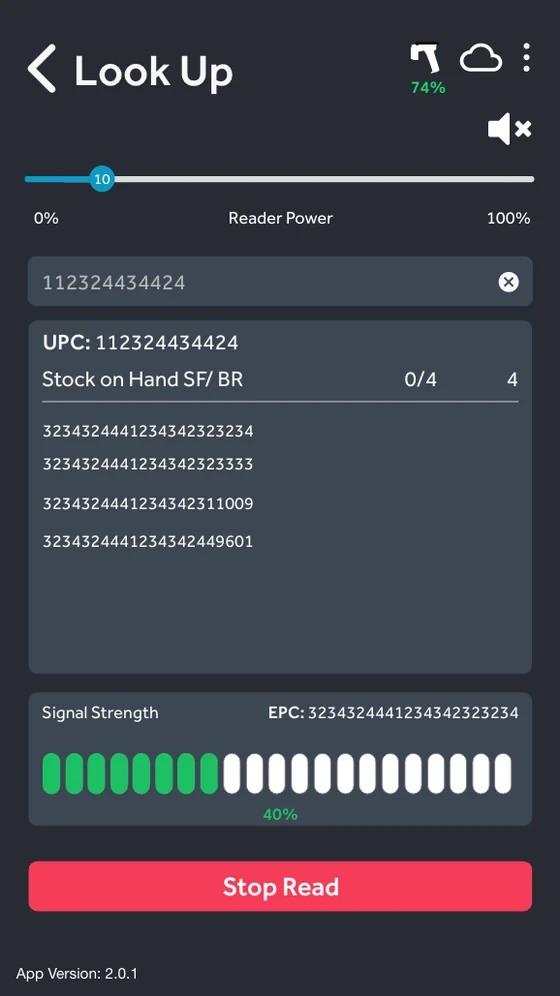
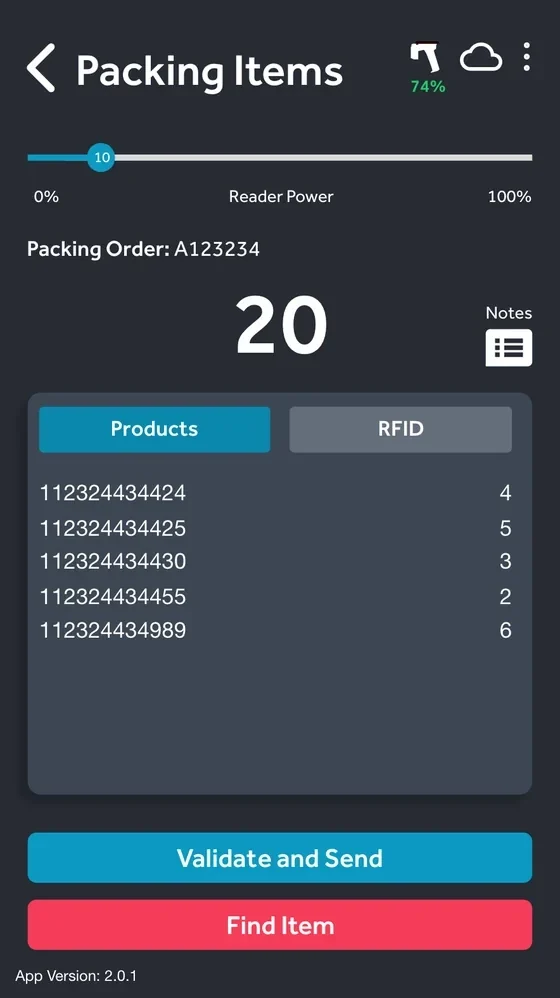
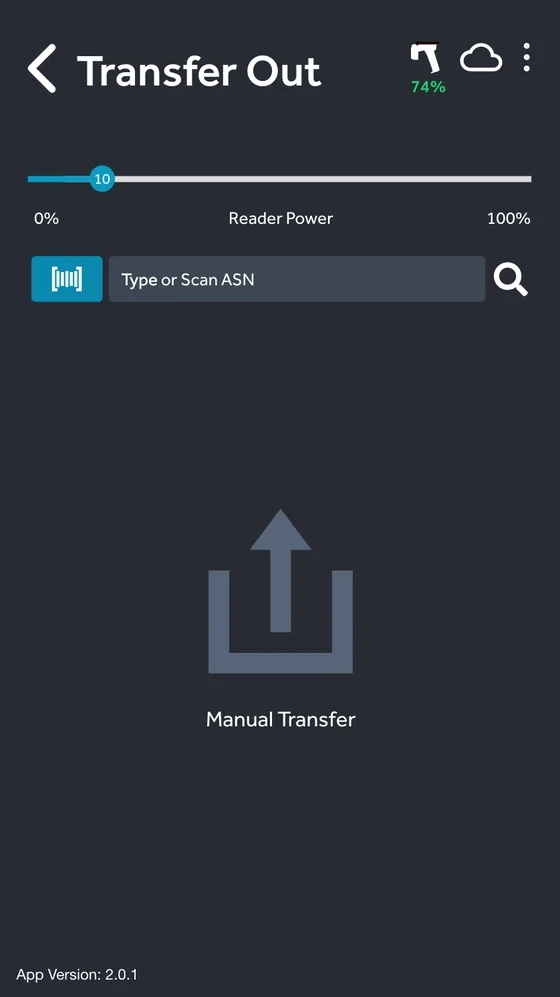
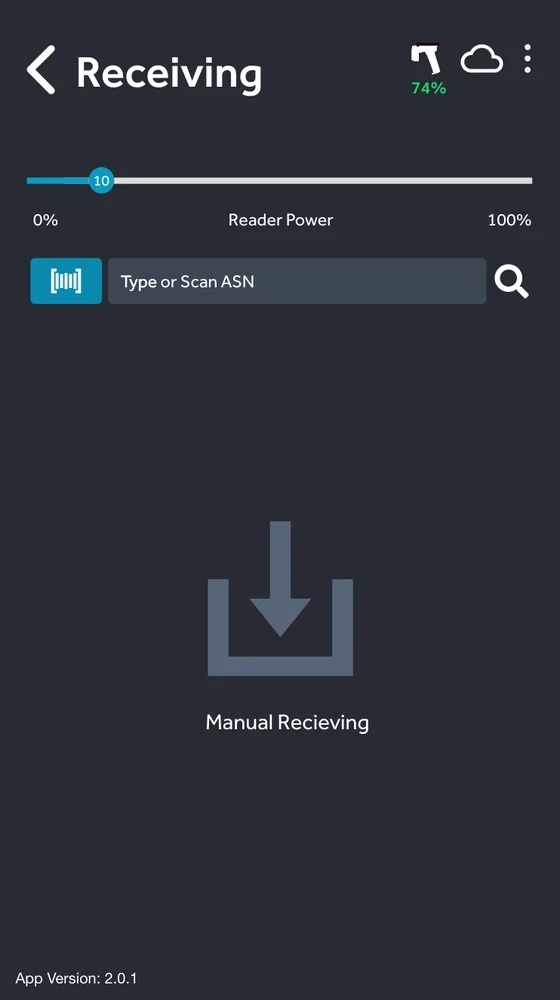
One application rather than one per process. The same handheld runs the cycle count, the look-up, the packing validation, the transfer and the receiving, under a single sign-on and a single role model — and it is configured centrally, so a thousand devices do not need a thousand visits.
- One app
- Single application with full access and role management, on Android and iOS
- Managed
- Central mobile configuration management, with MDM integration
- Processes
- Cycle count · manage tags · look-up · packing · transfer out · receiving
- Controls
- Packing validation, IBT locking, in-store GI built in
- Context
- Notes and comments on packing, transfer out and receiving
- Search
- Enhanced look-up and global search across the item record
A tag assigned to an inter-branch transfer cannot be assigned to another. The IBT auto-locks once packed and cannot be changed after the fact.
SMART reporting
A count is only worth what you do with it. The reporting layer turns each count into the four answers a store manager needs — what matched, what is short, what is extra, and what is critically out of stock — and rolls the same figures up to a regional and enterprise view without anyone rekeying a spreadsheet.
- Count
- Item accuracy, operational accuracy, stock on hand, EPC data front and back store
- Matching
- SKU-based report listing the items that matched
- Unders
- Items short during the count compared to stock on hand
- Overs
- Items extra, including items whose stock on hand was zero
- Analytics
- SKU discrepancy and outliers — where the biggest differences actually sit
- Supply chain
- Dedicated supply-chain reports and inventory by EPC
- Enterprise
- Dashboards, point-of-sale summary and conversion-rate monitoring
- Export
- Export individual reports; database access for BI tools; Microsoft Dynamics plugin
Enterprise reports and accuracy trending over time are in development — shown here so the picture is complete, not because they ship today.
One application, every process a store runs.
Screens from the shipping product, not a concept. Same sign-on, same role model, same item records.
The same item record, rolled up for a whole estate.
Eight screens from the reporting layer, in the state a chain of 42 stores would see them on a Monday morning. Product descriptions in the sample data have been recoded.


Overhead antennas, so the count never stops.
A cycle count is a photograph — accurate the hour it is taken, and drifting from that hour on. Ceiling-mounted antennas covering the sales floor, the fitting rooms and the back store read the same tags continuously, with nobody walking the aisles. The item record stays current while the store trades.
Across 42 stores — 112 nominal, 6 degraded. A reader that drifts raises an alert instead of quietly leaving a hole in the floor.
Reads are aggregated at the edge and reconciled centrally, so a store keeps counting through a broken link and catches up when it returns.
Nobody walks the floor to keep the number true. The handheld stops being the way stock is counted and becomes the way an exception is chased down.
The store closes, three people spend a shift on 16,000 items, and the number decays for the six months that follow. Most chains sit near 65% accuracy between counts.
The same count takes about one labour hour instead of 27, which makes a weekly cadence affordable. Counting every fortnight holds accuracy above 95%.
Coverage is fixed, so the count stops being an event. Accuracy becomes a live number rather than a monthly report, and a gap on the shelf is minutes old rather than a week.
The platform is the constant. The hardware is your choice.
Overhead antennas are one source of reads among several. Handhelds, portals, conveyors and tunnels feed the same item record, as does a plain barcode where an item is not tagged yet — and none of them is ours to sell you. Over 5,000 sensors and devices are already integrated.

Android and iOS devices, so the estate is yours to choose.
Overhead antennas
Ceiling arrays for the sales floor, behind-the-wall units where a fixture hides the item. Zoned, so a read carries a location and not just a presence.
Transition portals
Door and gate portals that read direction of travel — the point of exit, the stock-room door, the goods-in dock.
Conveyor & tunnel
Automated verification in the warehouse — shipping and receiving checked without opening the carton.
Printer / encoder
Mass printing and serialization at source, so the tag is commissioned before the item ships.
Four numbers a store manager can act on the same morning.
The figures below are a real count summary from the platform: what the system thought was there, what was actually read, and the gap broken into the three kinds of gap that need different responses.
Items read against items expected.
How well the count itself was executed.
Against 43,221 items actually counted.
With 11,095 in the back store.
What changes, and what each change is worth.
The starting point is labour. A typical store of 16,000 apparel items takes three staff a full shift to count by barcode. The same count by RFID takes a little over an hour.
Three employees, a full shift. Practically, that limits a chain to counting twice a year.
For the same labour cost a store can count weekly. Counting every two weeks holds stock accuracy above 95% and frees the rest of the time for selling.
From fewer out-of-stocks, better availability, and staff on the floor instead of in the stockroom.
The single number the rest of the business runs on.
Stock you can safely promise to an online shopper, because you know you have it.
Less held overall, and less held in the wrong place.
Mostly deterrence at interactive exit controls, plus knowing which products are actually prone to theft.
accuracy without RFID
is worth about a 1% sales lift
from 65% to 93% — no other investment
Against 31% of orders accurate on UPC alone — roughly a threefold improvement.
Cut, because stock available for online sale is known in real time.
Reduced, with fewer markdowns as replenishment goes where it is needed.
Saved by eliminating the annual physical audit as a separate exercise.
Reduced overall, with the freed time moved to customer service.
Recovered on a season by acting on an accurate mid-season count instead of a blanket markdown.
- Monthly accuracy variance 4–5% → 2–4.5%
- Items not displayed 30% → 4–6%
- Full-price sales +2.6% after first markdown
- Order fill +6.1% on tagged merchandise
- ~10% revenue uplift on size- and colour-intensive categories
- 1,030 stores, 43 warehouses
- 1.4 billion items tagged
- 90% tagged at point of manufacture
- Inventory checks 10× faster than manual
- Sales +11%, damage losses −9%
- Physical stock count >98% accurate
- Daily count time −80%
- Annual count time −85%
- Product locating time −75%
- RTV execution 75% → 90%+, LTI 65% → 90%
Figures above are drawn from Innovent’s retail ROI analysis and from publicly reported RFID programmes. They describe what these programmes achieved, not a guarantee of what any particular store will achieve — the return depends on category mix, current accuracy and how often you choose to count.
Built to run across a whole estate.
A retail chain is many sites, many operators and a lot of intermittent connectivity. The platform is shaped for that rather than for a single flagship store.
SaaS, multi-tenant, multi-site
One tenancy per business, every site under it, with minimal infrastructure in the stores themselves.
Full offline support
Point of exit and point of sale keep working when the link does not, and reconcile when it returns.
Secure, and usable by third parties
Role-based access built for stores staffed by contractors and third-party operators, not only by employees.
Open where it has to be, closed where it matters.
What a retail IT team asks before the first store goes live.
Integration
- Microsoft Dynamics plugin for the ERP side
- Direct database access so BI tools read the same figures the dashboards do
- POS integration for sales, returns and conversion monitoring
- MDM integration for the handheld estate
- Country and company configuration for multi-market groups
Operations
- Single application with full role management
- Central mobile configuration — devices configured once, centrally
- IBT locking so a packed transfer cannot be quietly altered
- Notes and comments retained against every process for later audit
- Interactive reports with per-report export
Innfini gives retailers one readable item record from the factory floor to the till — and the reporting to act on it the same morning.
Model the savings for your operation.
Slide the knobs, see your payback period, 3-year ROI, where the savings come from, and a cumulative cash-flow curve.
See Innfini run your operation.
A walkthrough with our solutions team — your systems, your sites, your workflows.